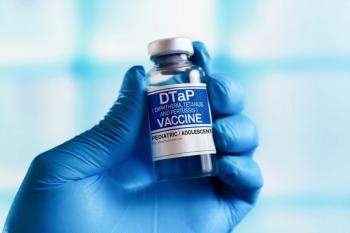
Completing the DTaP primary series was 96.2% effective against pertussis in Alaska children aged 6 months to 6 years during a record 2024 outbreak.
The AAP recommends annual flu vaccination for all children aged 6 months and older and updates antiviral guidance for the 2026–2027 season.
The American Academy of Pediatrics (AAP) continues to recommend annual influenza vaccination for all children aged 6 months and older and has updated guidance on vaccination of immunocompromised children, antiviral treatment, and chemoprophylaxis for the 2026–2027 influenza season.1,2
“Some parents may still think the flu is just another cold, and so pediatricians need to make sure parents have the facts,” said Kristina A. Bryant, MD, FAAP, a member of the AAP Committee on Infectious Diseases (COID). “Flu can be a serious, life-threatening illness that can result in hospitalization or death.”
The policy statement, published in Pediatrics, notes that influenza vaccination coverage remained low during the previous season. Through May 16, 2026, 49.4% of children aged 6 months through 17 years had received an influenza vaccine, a rate similar to the previous year. Vaccination rates differed according to age, race and ethnicity, poverty status, urbanicity, and maternal educational status.
“The AAP recommends annual influenza vaccination of all children without medical contraindications starting at 6 months of age,” the authors stated.
All influenza vaccines available in the United States for the 2026–2027 season are trivalent, with updated vaccine compositions. Afluria is no longer available, and recommendations for vaccination of immunocompromised children have been revised to align with recommendations from other professional groups.
The AAP recommends any licensed influenza vaccine appropriate for a child’s age and health status, without preference for an inactivated egg-based vaccine, cell culture-based vaccine, recombinant vaccine, or live attenuated vaccine when otherwise appropriate. Vaccination should not be delayed to obtain a particular product.
Children should receive influenza vaccine as soon as it becomes available, particularly those who require 2 doses during the season. Recommended doses should ideally be completed by the end of October. Children who require 2 doses do not need to receive the same brand or formulation for both doses.
“I think these are going to be an important resource especially for clinicians who take care of kids who are being treated with chemotherapy or who have undergone organ transplantation or hemopoietic cell transplantation,” said Bryant. “They can now have all of the recommendations in one place.”
For the 2026–2027 season, influenza vaccine prescribing information also reflects postmarketing data on febrile seizures. Two observational studies identified an increased risk during the first day after standard-dose influenza vaccination among children aged 6 months through 4 years. The estimated attributable risk was 1 excess febrile seizure per 47,170 doses of quadrivalent vaccine and 1 per 22,624 doses of trivalent vaccine.
“What parents need to know, is the overall risk of febrile seizure is low,” said Bryant. “We also need to educate them about the fact that influenza can be associated with seizures, including febrile seizures. So, this updated package insert doesn’t change the overall risk-benefit assessment of flu vaccine for kids.”
The AAP recommends antiviral treatment as early as possible for any child hospitalized with suspected or confirmed influenza; children with severe, complicated, or progressive illness; and children younger than 5 years or those in other groups at increased risk for influenza complications. Treatment is recommended regardless of vaccination status or symptom duration.
For otherwise healthy children treated in the ambulatory setting, antiviral therapy may be considered when it can be initiated within 48 hours of symptom onset. Treatment also may be considered for children whose siblings or household contacts are at increased risk for influenza complications.
Oseltamivir remains the AAP’s preferred antiviral for influenza A and B based on pediatric experience with efficacy, safety, cost, and administration. The AAP and CDC support oseltamivir treatment in term and preterm infants from birth when indicated.
For postexposure chemoprophylaxis, oseltamivir is also the preferred option when prophylaxis is indicated. Chemoprophylaxis is generally not recommended for infants younger than 3 months unless the situation is considered critical, as safety and efficacy data remain limited in this age group.
“The good news is flu vaccines have been thoroughly studied,” said Bryant. “We know they are safe in children and they can prevent not just hospitalizations and death, but every year they prevent a substantial number of illnesses that result in trips to the doctor’s office. We want to keep kids healthy and going to school and parents healthy and going to work. Flu vaccines can help us accomplish that.”