Christina Boull, MD, explains how pediatricians can recognize dermatologic conditions in darker skin tones and address pigment changes and treatment gaps.
A scaly patch on a baby's scalp could be cradle cap — or the first sign of a lifelong condition. Lisa Swanson, MD, walks through the exact clues that tell the two apart.
Welcome back to another Contemporary Pediatrics Insights series. In this episode titled "How to Recognize Early Pediatric AD and Rule Out Cradle Cap," Lisa Swanson, MD, opens by describing how atopic dermatitis (AD) typically first appears in very young infants, most often on the cheeks, chin, and scalp, and sometimes the neck, arms, and legs. Because AD frequently shows up on the scalp, she explains it is commonly mistaken for seborrheic dermatitis, or cradle cap. The two conditions can look strikingly similar, and Swanson notes that early cradle cap often predicts that a child will go on to develop AD — the 2 may even sit on the same clinical spectrum. The clearest distinguishing feature, she says, is itch: eczema is itchy, while cradle cap typically is not. Another useful clue is distribution — if a child has a rash elsewhere on the body that looks like eczema, a similar-looking rash on the scalp is likely eczema as well.
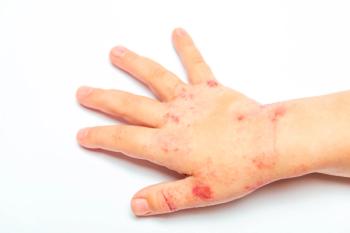
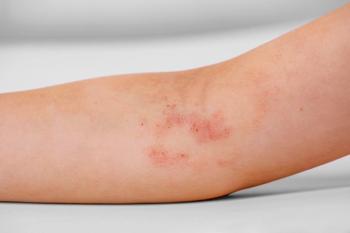
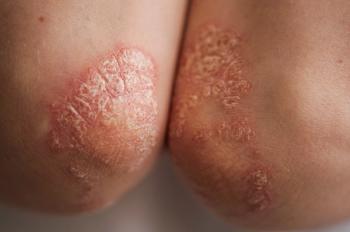
Swanson then walks through how AD's presentation shifts as children grow. Regardless of age, she stresses, AD is always an itchy rash — that feature never changes. In infants, it favors the cheeks, chin, scalp, arms, and legs. As children become toddlers, it commonly appears on the elbows and knees, a distribution that can lead to misdiagnosis as psoriasis. By school age, AD tends to concentrate in the antecubital and popliteal fossae, along with the hands, feet, and sometimes the eyelids. In the teen years, hand and eyelid involvement becomes more prominent, while the fossae remain common sites. Swanson emphasizes that these shifting patterns, combined with the persistent itch, are the most reliable tools for correctly identifying AD across every age group and skin tone.
In the next episode, "Severity Scoring and First-Line Topical Therapy for Pediatric AD," Swanson moves from diagnosis to management, walking through the two clinical scoring tools she actually uses in practice and the topical regimen she reaches for first.