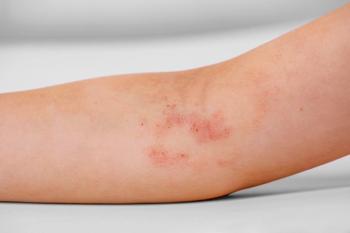
Christina Boull, MD, explains how pediatricians can recognize dermatologic conditions in darker skin tones and address pigment changes and treatment gaps.
Lisa Swanson, MD, narrows in on severity assessment tools that are actually practical for a busy pediatrics office, as opposed to the more elaborate scales used in clinical trials.
Lisa Swanson, MD, narrows in on severity assessment tools that are actually practical for a busy pediatrics office, as opposed to the more elaborate scales used in clinical trials. She highlights the Investigator Global Assessment (IGA), an easy-to-apply score ranging from clear to almost clear to mild, moderate, or severe, which she says any pediatrician's office can use to place a patient's current status. She also points to the itch score, a 0-to-10 scale that clinicians can estimate but should also ask patients and caregivers to rate directly.
From there, Swanson lays out her starting approach to mild-to-moderate AD. For infants, she typically begins with hydrocortisone 2.5% in a cream or ointment base applied twice daily to all affected areas until the skin clears. For older children, she may step up to a mid-potency steroid such as triamcinolone 0.1% or mometasone 0.1% applied twice daily to the body, while reserving hydrocortisone 2.5% for the face and skin folds. For families looking to reduce reliance on topical steroids, she describes topical calcineurin inhibitors — pimecrolimus and tacrolimus — as a steroid-free option appropriate for any body area, generic and accessible, though slower acting and occasionally associated with burning or stinging on application.
Swanson closes by reaffirming that topical corticosteroids remain a strong starting point: they are inexpensive and effective, even as clinicians navigate a climate of heightened steroid phobia among families.
In the next episode, "Reassessing Topical Steroid Therapy and Long-Term Safety in AD," Swanson turns to the follow-up visit, explaining exactly what she checks to know whether a treatment plan is working — and the real risks of leaning on topical steroids for too long.