






Since mom went to the hassle of bringing along the 4 year old to her little brother's appointment, why not help make it worth the trip and get her up-to-date, too?

Since mom went to the hassle of bringing along the 4 year old to her little brother's appointment, why not help make it worth the trip and get her up-to-date, too?

Here, in the second in a series of podcasts, Dr Ellen Clayton reviews findings of a landmark Institute of Medicine study on vaccine safety and offers information about specific vaccines that may be very useful to you when you answer questions from worried parents.

The issue of vaccine safety has been making headlines lately. Some of the publicity-particularly in the lay press and television-has been negative.

You and your colleagues are undoubtedly hearing questions from a lot of concerned parents about the new guidelines for vaccinating young boys against HPV infection. What are the chief concerns-and how can you best address those concerns?

What exactly are the new guidelines for vaccinating boys against HPV infection-and why is this development good news for both men and women?

How will you address this question when your patients ask? Find out in this podcast.

As the calendar advances to the fall months, we are reminded everywhere that it’s time for the annual influenza vaccination. In August 2011, the Advisory Committee on Immunization Practices (ACIP) updated its vaccination recommendations to include new guidelines for children ages 6 months through 8 years, and for persons with egg allergy.
My 18-month-old son has had a diaper rash, with no other symptoms, within a few days of eating a poached egg on 3 separate occasions.
Vaccination against infectious diseases has saved millions of lives. The recurrent threat of influenza pandemics and the prevalence of global HIV infections underscore the need for better-designed, more effective vaccines.
The lay public is being increasingly educated about the significant impact of HPV infection and the potential benefits of vaccination in reducing female cervical cancer. More medical providers need to recognize the substantial disease that could be prevented in men.
It certainly is reasonable for pediatricians to discharge patients if parents consistently refuse vaccinations. More than one-third of surveyed pediatricians agree.1 Although the American Academy of Pediatrics suggests avoiding the dismissal of vaccination refusers, it also recommends consideration of dismissal “when a substantial level of distrust develops, significant differences in the philosophy of care emerge, or poor quality of communication persists.”
Newborns and young infants represent the population most at risk for the burden of severe pertussis-related and influenza-related morbidity and mortality. The sources of these infections in infants are often unclear but are probably adolescents and adults (pertussis) and children and adults (influenza)
With the sole exception of the multidose influenza vaccine, childhood vaccines are now thimerosal-free. Communicating this fact (with signs in clinic) is a quick and effective way of making this concern a non-issue. It helps reinforce the message that vaccines are safe. Parents are made aware that the pediatrician is cognizant of their concerns and has endeavored to address those concerns.
The importance of vaccination has been well proved over the years for both individuals and the community as a whole. According to the 2004 to 2006 National Immunization Survey sponsored by the CDC, about 80% of children in the United States are up-to-date (UTD) with their immunizations, a rate that although respectable still leaves room for improvement.
Invasive pneumococcal disease (IPD) in children can cause serious illness-including meningitis, pneumonia, and bacteremia-and death. Fortunately for children, their families, and their pediatricians, the incidence of IPD in children younger than 5 years has dropped significantly following the widespread adoption of the pneumococcal conjugate vaccine (PCV).
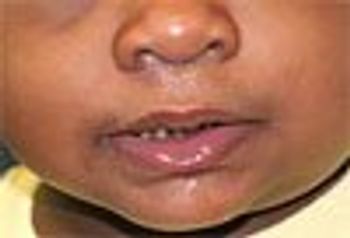
On awakening in the morning, a 2-year-old girl was noted to have left-sided facial swelling and was brought to the emergency department. The child had had no fever, trauma to the area, pain, or difficulty in swallowing. Her medical history was unremarkable. Her immunizations were up-to-date; she had received both doses of the measles, mumps, and rubella (MMR) vaccine about 6 months before presentation. There were no sick contacts.
After independent academic researchers, using a new technology, found DNA from porcine circovirus 1 (PCV1) in GlaxoSmithKline’s Rotarix vaccine, the FDA has recommended that clinicians temporarily suspend administration of the vaccine. The recommended suspension is a precautionary measure, put into effect while the FDA reviews the data and conducts further investigations.
For decades, our country's health care system and its government have struggled with the challenge of providing immunization coverage for all children. Starting with the Section 317 legislation of 1962, numerous policy initiatives have been passed in an effort to ensure that sufficient supplies of vaccines are available, that the cost of vaccines for low–income children is covered-and that these vaccines are actually administered to the children that need them.
The expansion of the immunization schedule for 2009 has resulted in several success stories. Two rotavirus vaccines are now available. Following the introduction of immunization against rotavirus, a sharp decline in cases of rotavirus gastroenteritis was seen.
Children with asthma who had received influenza vaccination had fewer asthma exacerbations, according to a recent study conducted in the pediatric clinics of Brooke Army Medical Center, Fort Sam Houston and Wilford Hall Medical Center, Lackland Air Force Base in Texas.
A 17-month-old girl awoke with drooling, cough, respiratory distress, and a muffled cry and was brought to the emergency department. She had no nausea, vomiting, or diarrhea and no history of choking, aspiration, or airway problems.
Vaccines are perhaps the single most important contribution the 20th century made to civilization. They have been responsible for saving untold numbers of lives and for vastly improving the quality of many more. Although vaccines have had some bad press of late, they are still strongly recommended by the medical community. However, financial issues, difficulties with managed care organizations (MCOs) and other parts of our health care system, and problems with the manufacture and delivery of vaccines prevent optimal use of this crucial preventive service. Here I discuss the problems associated with vaccine delivery and administration and suggest several practical solutions.
Vaccines may represent the greatest advance in children’s health of the past 50 years, but they also, sadly, can frequently be a source of stress for today’s pediatricians. There is the issue of potential difficulty in recouping the cost of the vaccines from managed care organizations.
According to one Web site, pediatric health care providers should be arrested and prosecuted because of their involvement in the “chemical holocaust” of children.1 This chemical holocaust refers to vaccination- one of the greatest public health successes in the history of modern medicine.
Parents are understandably concerned about vaccines and autism, a relationship publicized by lawsuits, alternative therapies, and claims of government cover-up.