

More parents are looking to nutritional supplements to address depression symptoms in their children. Here’s what pediatricians need to know about the risks and benefits of these treatment options.
More parents are looking to nutritional supplements to address depression symptoms in their children. Here’s what pediatricians need to know about the risks and benefits of these treatment options.

Abnormalities of the limbs at birth can be devastating for the parents of a newborn. However, the primary care pediatrician, a rehabilitation team, and the family can help the child develop normal functioning and be independent.

Often we treat a child without considering the parental role, as when we prescribe an antibiotic to be multiple times a day. Other times we do need to consider the parents. Here are the thoughts from Jon Matthew Farber, MD, on how parents view, interact with, and advocate for their children in these situations.

Although fish oil supplements did not improve asthma exacerbations in children who are obese or overweight, the question remains whether fish oil could help other types of children with asthma.
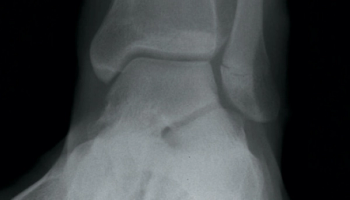
A 15-year-old adolescent Caucasian male with no significant past medical history presented to the clinic with gradually worsening left ankle pain over the past 2 weeks, ever since he started his football practice. He complained of dull aching pain at the lower end of his left leg for the past 4 months, which was slightly relieved by over-the-counter nonsteroidal anti-inflammatory drugs (NSAIDs). He twisted his left ankle and noticed further worsening pain, which prompted this doctor visit.

Release of school report cards on a Friday is associated with a significant rise in certified child physical abuse reports the following day, a retrospective study of a single academic year in Florida found.

A pediatrician praises the pediatric medical home concept for improving his patient care and family satisfaction.
Whereas rates of screening for adolescent major depressive disorder (MDD) have increased in recent years, they still are insufficient to address the current mental health crisis among adolescents, an analysis of countrywide data for 413,080 12- to 14-year-olds showed.

Parents who maintain open lines of communication with their teenagers and are involved in their activities have children who eat better, exercise more, and use less screen time, according to a new report.
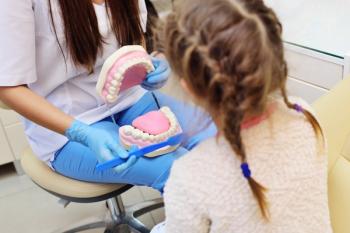
We have all encountered patients with caries and other dental issues and discussed with the patients and caregiver the importance of dental visits and brushing their teeth. What else should we be doing?

Imagine the joy of experiencing a late fall, winter, and spring season of never having to press the e-prescribing submit button in the electronic health record for an antiviral medication to treat an infant, child, or adolescent who is very ill after contracting influenza.

For Contemporary Pediatrics, Dr Bobby Lazzara discusses a research letter published in JAMA Pediatrics that examined how well children's and non-children's hospitals adopted the 2011 guidelines for prescriptions written for community-acquired pneumonia treatment.


Infections and how they are treated early in life may impact how mental health disorders develop early on, according to a new report, highlighting the need for a better understanding of the mind/body connection.

Patients with cystic fibrosis (CF) are deficient in vitamin D, which at higher levels can help prevent exacerbation. A new study examines current guidelines and future recommendations.
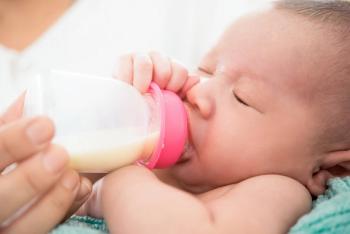
Children who are fed milk cereals daily in infancy are more likely to be overweight or obese later in childhood, according to a new report.
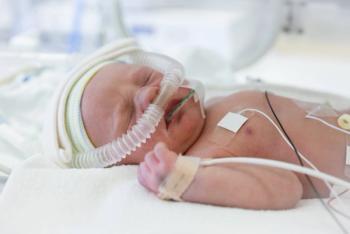
A review of oxygen resuscitation in preterm infants at birth reveals that high oxygen concentrations may not be as toxic as previously thought, but also failed to identify an ideal FiO2.

Teenagers who display certain obsessive-compulsive symptoms, even without a diagnosis of obsessive-compulsive disorder (OCD), may be at higher risk for other serious psychiatric problems.
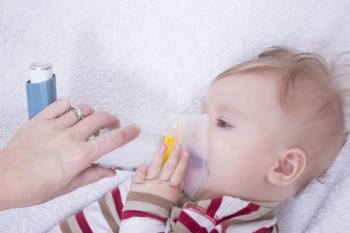
Predicting the likelihood that a child will develop asthma has long been a challenge, but a new tool could offer more than previous assessments.
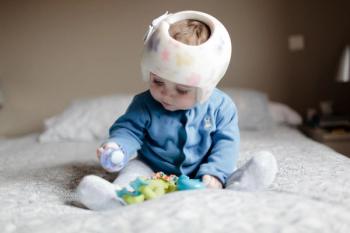
A new study urges pediatricians to screen for cognitive challenges as children with PPB age.
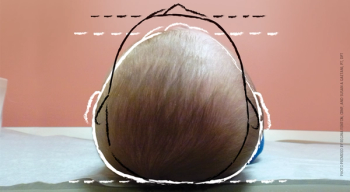
Pediatric healthcare providers are on the front lines to provide early identification and treatment of plagiocephaly/brachycephaly and torticollis for those infants spending more time supine/reclined and less time prone. Here’s why early intervention is so important.

The second part of this article on integrating oral health into primary pediatric care discusses the important role of fluoride and fluoride varnish application for preventing dental caries in children.

Growing resistance to current drugs for influenza has spurred development of a new class of antivirals that target virus replication.
Many 6- and 12-month-old infants do not yet sleep through the night, but Canadian researchers found no significant associations between this situation and infants’ mental and psychomotor development or their mothers’ mood.

Jon Matthew Farber, MD, practices in Northern Virginia where he can refer patients to a large variety of pediatric specialists, but he often chooses not to do so. Here are some common conditions/findings that are often referred out that he believes are often unnecessary.
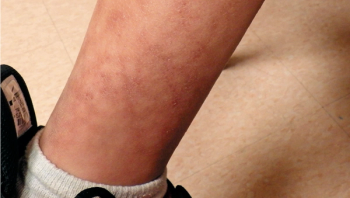
A healthy 11-year-old boy is brought to the office for evaluation of asymptomatic reticulated rash that started on his ankles 3 weeks ago and since has spread to his shins and the tops of both feet. He is on no medications and has had no history of trauma or recent illness. What's the diagnosis?
Febrile infants from disadvantaged neighborhoods with high rates of childhood poverty are much more likely than their peers from more affluent neighborhoods to have a bacterial source for their fever, according to a retrospective study of infants aged 90 days or younger with a temperature of 100°F or greater who visited an emergency department (ED) of an urban children’s hospital.
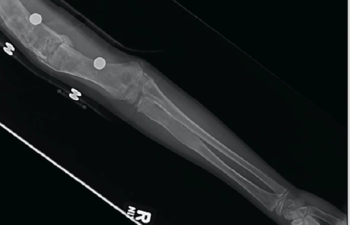
The patient, an 8-year-old male who recently immigrated to the United States from El Salvador, initially presented to the emergency department (ED) for a cough. The next day, he went to the general pediatrics clinic for follow-up and was noted to have a significant history of recurrent fractures.
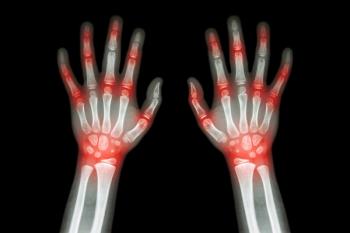
Early detection and vigilant screening are essential to reduce ocular complications, including blindness, in patients with juvenile idiopathic arthritis (JIA).
Of 973 preschool-aged children with acute gastroenteritis who visited 1 of 10 geographically diverse pediatric emergency departments (EDs), those who received a 5-day course of Lactobacillus rhamnosus GG, a commonly recommended and used probiotic, did not have better outcomes than those who received placebo, a prospective, randomized trial found.