Allergy, Immunology, and ENT

Latest News


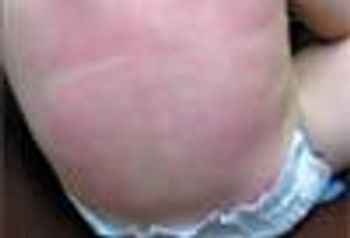
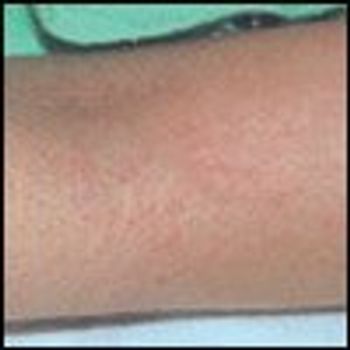
Henna and Hair DyeA 16-year-old Somali girl presented with a 30-day history of bilateral arm swelling and painful vesicular eruptions.Five days before presentation, she and her friends had used henna and black hair dye to “tattoo” their skin. Theothers did not experience similar signs or symptoms. This patient had used henna since childhood for decorativepurposes. However, outlining an intricate design with hair dye was new for her.This patient was hospitalized and treated for severe cosmetic dermatitis with systemic corticosteroids,diphenhydramine, and daily dry dressing changes. Ibuprofen was given to help relieve discomfort. Antibioticswere not ordered.The patient remained afebrile and was discharged on hospital day 2 with close follow-up and daily dressingchanges. She was advised to avoid contact with all hair-dye products.Case and photo courtesy of Jennifer A. Jewell, MD, and Lorraine L. McElwain, MD.

Severe disability and even death can result from the inappropriate diagnosis and treatment of a young child's wheezing, which is heterogeneous in its origins and expression. Consequently, a differential diagnosis is necessary to determine the cause and to develop an effective management strategy. Viral-induced wheeze, especially from respiratory syncytial virus (RSV), manifests as a bronchiolitis. Recent reports show that the cysteinyl leukotrienes are an important mediator of the airway effects of RSV infection and that leukotriene receptor antagonists reduce postrespiratory syncytial virus lung symptoms. Exercise-induced bronchoconstriction manifests as wheezing and can be treated or pretreated short-term with inhaled bronchodilators or cromolyn: long-term therapy includes inhaled corticosteroids and leukotriene receptor antagonists. Allergic rhinitis-associated wheeze may be the result of acute exposure to an allergen or simply from nasal dysfunction. Control of allergic rhinitis with intranasal steroids, antihistamines, or leukotriene receptor antagonists could relieve the wheezing. Asthma-associated wheeze requires long-term use of 1 or more daily controller medications. The primary goal is to navigate the child safely through the first episode of wheezing, consider the causes of the wheeze, and then evaluate the need for further therapy. All apparent causes of wheeze should be treated with the idea that if the apparent cause turns out not to be the actual cause, treatment can be safely discontinued.

A thriving boy was brought to the office 3 weeks after his first birthday. His mother reported that there was "something wrong with his knee." On visual examination, the knee appeared perfectly normal. On palpation, however, a 4-cm linear induration was evident over the knee fat pad, just medial and distal to the patella. It appeared soft, crepitant, and associated with the skin. No tenderness was noted on palpation; the infant did not object to palpation of this density any more than to auscultation, otoscopy, or anthropometric measurements. No erythema, ecchymosis, or signs of trauma were evident near the lesion. The only possibly relevant history was that the child had spent his birthday at his grandmother's home in the Ukraine a month earlier. He was constantly with his mother during that time, and no trauma was ever reported.
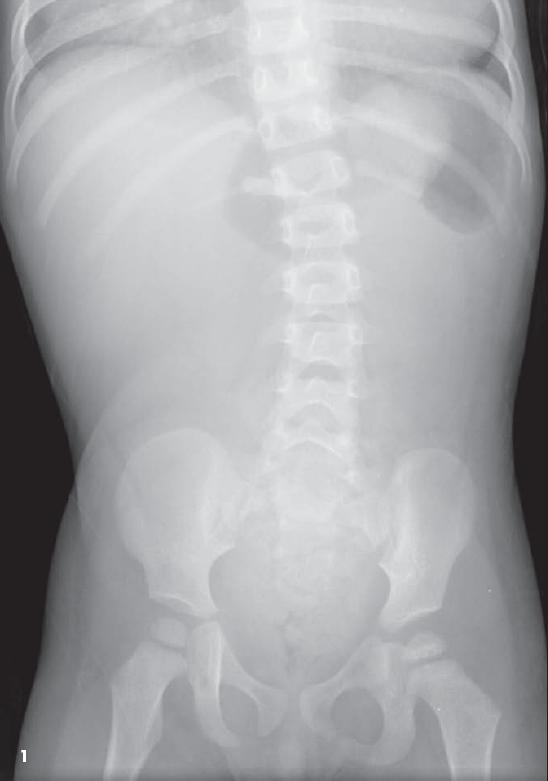

Foreign-body aspiration is a relatively common occurrence in children. It may present as a life-threatening event that necessitates prompt removal of the aspirated material. However, the diagnosis may be delayed when the history is atypical, when parents fail to appreciate the significance of symptoms, or when clinical and radiologic findings are misleading or overlooked by the physician.

For several weeks, an 18-year-old man has been bothered by itchy ears. He has seasonal allergies that are well controlled with oral antihistamines. He has not been exposed to contactants and has not used any nutritional supplements or new shampoos or conditioners. He works out at a gym 5 days a week.

Attention deficit hyperactivity disorder (ADHD) is very common. In the United States, between 6% and 10% of children and adolescents are affected, as are 4% of adults.1 Children in other countries also have ADHD, although rates of comorbid disorders may vary from those found in the United States.2

The prevalence and incidence of sinus infection, or sinusitis, is increasing and has been estimated to affect 31 million persons in the United States each year. It is one of the most common reasons why patients seek a physician's care. If left untreated, sinusitis can cause significant physical symptoms and can negatively affect quality of life by substantially impairing the daily functioning of sufferers. For children, this can mean learning difficulties at school and for adults, a loss of efficiency at work.

An otherwise healthy 10-month-old boy was brought to an allergy clinic for evaluation of atopic dermatitis and chronic rhinitis. On arrival at the clinic for aeroallergen and milk prick skin testing, a rash was noted that was different from his usual atopic dermatitis. The rash had not been present 2 hours earlier when the mother dressed the child and placed him in his car seat during the ride to the clinic.

A 7-week-old white boy presented to the emergency department (ED) with vomiting and weight loss. His parents brought him to the ED 3 weeks earlier after he had vomited for several days. Possible milk protein allergy was diagnosed at that visit, and a change from cow milk formula to an elemental formula was recommended. Vomiting subsequently increased in frequency. Nonbilious but forceful vomiting occurred with each feeding. The patient lost nearly 2 lb during the 3 weeks that followed the first ED visit.

A 2-year-old boy was brought for evaluation of a rash and fever of 2 days' duration. He had atopic dermatitis since 6 months of age that was partially controlled with low-potency topical corticosteroids and emollients. His father reported that recently the facial dermatitis had worsened, with increased redness, pain, and some skin breakdown. The child's medical history was otherwise unremarkable. His mother had a history of "cold sores."

This adolescent girl presents with painful purple papules that have developed on her toes. These papules are making it impossible for her to wear her "fashion" shoes to school in the late fall and early winter. She reports that her feet have been cold for as long as she can remember and that she is not bothered by it. She is otherwise healthy, takes no medications, and does not smoke.

ABSTRACT: Children are at greater risk than adults for many travel-related problems, such as barotitis and barotrauma associated with flying, cold and heat injury, drowning, and infection with geohelminths. Most of these problems can be avoided with appropriate measures. To prevent insect-borne diseases, advise parents to apply permethrin to their children's clothing before the trip and apply slow-release DEET (30% to 35% concentration) to their skin every 24 hours. Infection with ground-dwelling parasites can be avoided by wearing protective footwear. At high altitudes, infants and children may experience acute mountain sickness. Acetozolamide (5 mg/kg/d, divided bid or tid) is an effective prophylactic; however, it is contraindicated in patients with sulfa allergy. Some preventive measures that are effective in adults may not be appropriate for children; for example, several medications used to control motion sickness are ineffective and associated with significant side effects in children.

An 8-year-old boy seen at a gastroenterology clinic after "accidentally" swallowing 2 coins 4 days earlier. Had difficulty in breathing shortly after swallowing the coins and was taken to emergency department. X-ray films at that time demonstrated coins in his esophagus. Patient was immediately transferred to a tertiary care facility. Repeated x-rays showed the coins in his stomach. Patient was sent home with instructions to follow up with his pediatrician in 1 to 2 days.