



Drug Pipeline News
Latest News
Advertisement
Latest Videos









Shorts

0:29
Why oral gonorrhea treatment changes everything
10 months ago
by
Edward Hook, MD(+1 more)

0:25
Angela Hasler, APRN, CPNP-PC, on gepotidacin FDA approval for urogenital gonorrhea
10 months ago
by
Joshua Fitch, Senior Editor

0:28
Is antithrombin deficiency the most potent inherited blood clot risk?
10 months ago
by
George M. Rodgers, III, MD, PhD

0:25
Why identifying antithrombin deficiency early is crucial for treatment
10 months ago
by
George M. Rodgers, III, MD, PhD

0:28
Safety and tolerability of tapinarof cream 1%
10 months ago
by
Druhan Howell, MD(+1 more)

0:26
A pediatric indication for antithrombin III to treat hATd
10 months ago
by
George M. Rodgers, III, MD, PhD(+1 more)

0:36
12% of kids suffer from this GI condition: Here's the solution
a year ago
by
Julie Khlevner, MD, AGAF

0:22
Reacting to the FDA approval of sepiapterin to treat PKU
a year ago
by
Suzanne Hollander, MS, RD, LDN(+1 more)

0:49
Why high glucocorticoid doses can harm kids beyond the obvious
a year ago
by
Richard Auchus, MD, PhD(+1 more)

Advertisement
More News
FDA approved nipocalimab (Imaavy) for wAIHA in patients 12 and older, based on Phase 2/3 ENERGY trial data on durable hemoglobin response.

Phase 3 data show lebrikizumab improved skin clearance, itch, and quality of life in children with moderate-to-severe atopic dermatitis.
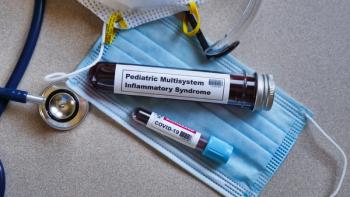
Infliximab or steroids may be more effective than anakinra as adjunctive therapy for children with MIS-C who do not respond to IVIG.
FDA granted priority review to Teva's ecopipam for pediatric Tourette syndrome, backed by phase 3 data showing reduced relapse risk.
Scholar Rock says apitegromab's SMA BLA stays on track for its September 30, 2026, PDUFA date after dropping one of 2 fill-finish sites.

Phase 3 SMART data support the safety of clesrovimab in infants and children at increased risk for severe RSV disease across 2 seasons.

Revised Anaphylm packaging cut pouch-opening time from 17 to 3 seconds, and self-administered PK matched clinician-administered data.
Phase 3 SMART trial found clesrovimab was well tolerated in high-risk infants through 2 RSV seasons, with safety comparable to palivizumab.
FDA accepted Merck's sBLA extending ENFLONSIA (clesrovimab-cfor) to high-risk children under 2 in their second RSV season.
A look back at the FDA approvals, regulatory decisions, and pipeline updates in the pediatric health care space from July 2026.
A look back at the latest clinical trial updates for the pediatric population during July 2026.

CTx-1301 improved clinician-rated ADHD symptoms versus placebo in a phase 3 pediatric trial, but detailed safety data remain limited.

Ensitrelvir adds an FDA-approved COVID-19 postexposure prophylaxis option for adults and adolescents aged 12 years or older.
FDA cleared Masimo's pediatric Patient State Index, a SedLine EEG-based sedation score calibrated for children aged 4 and older.

In the OUTMATCH trial, omalizumab achieved higher treatment success than multiallergen oral immunotherapy, largely because of fewer adverse events.

CSL reported that most children receiving garadacimab remained attack-free in a recent phase 3b study of garadacimab-gxii for prevention of hereditary angioedema.
The FDA has approved novel norepinephrine, dopamine, and serotonin reuptake inhibitor (NDSRI) centanafadine for ADHD in children, adolescents, and adults
FDA approved Tylenol with Naproxen, the first OTC fixed-dose acetaminophen/naproxen sodium tablet, for 12-hour pain relief in patients 12 and older.

A pooled ADORING trial analysis found tapinarof cream improved skin clearance by week 2 across ages 2 through adulthood in atopic dermatitis.

Udenafil lowered ELF scores after 12 months in an exploratory Fontan substudy, but liver stiffness measures did not significantly change.

The FDA granted priority review to obinutuzumab for relapsing/steroid-dependent pediatric INS, based on phase 3 INShore remission data
FDA accepted BioMarin's sNDA to convert vosoritide's achondroplasia indication to full approval, with a PDUFA date of February 28, 2027.

Tralokinumab showed expected pharmacokinetics and no new safety findings in 28 children with moderate-to-severe atopic dermatitis.

The first infant has been screened in the THRIVE trial evaluating the VIASKIN Peanut Patch as an early intervention for peanut allergy.

A matched cohort study found no meaningful difference in serious or outpatient infection risk between infliximab and adalimumab in pediatric IBD.
Advertisement
Advertisement
Trending on Contemporary Pediatrics
1
A puzzling rash in a toddler
2
Pediatric institutions showed limited social media response to acetaminophen-autism claims
3
Osteopathic treatment shows safety in infants with plagiocephaly
4
Type 1 diabetes update: Immune therapy, screening, and new technology
5