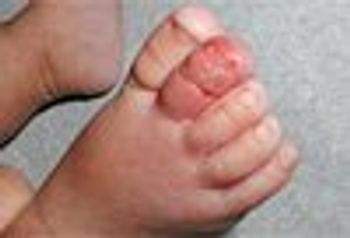
Swelling and redness have progressed over the past 16 hours in this 5-month old boy.
Swelling and redness have progressed over the past 16 hours in this 5-month old boy.

A new prospective study confirms previous suggestions that in very low-birth-weight newborns exposed to treatment with ranitidine for gastric acid suppression, the rate of infections is significantly higher, as are the risk of necrotizing enterocolitis, length of hospital stay, and fatal outcome.
Could sleep problems help explain why even adherent young patients with type 1 diabetes may have trouble maintaining blood glucose control? A new study suggests that poor sleep not only worsens blood glucose control but also quality of life in youth with diabetes. Perhaps it’s time to include routine sleep assessment in the clinical care of your young patients with type 1 diabetes.
New research funded by the National Institute of Mental Health found that risperidone as a first-line treatment for childhood mania is more effective than other mood-stabilizing medications. However, be aware that potentially serious metabolic effects associated with this antipsychotic drug are raising concerns about long-term treatment.
Most sexually active US high school students have not been tested for human immunodeficiency virus, despite recommendations from the Centers for Disease Control and Prevention, the American Academy of Pediatrics, and other organizations calling for routine testing. Find out why health care providers must play a central role in increasing the number of teens being tested.
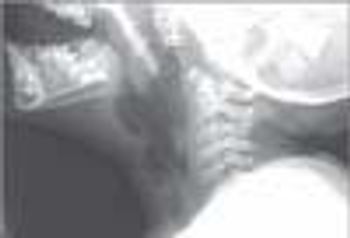
Hoarseness developed in a 27-month-old girl who was previously treated in the ED for a presumed asthma exacerbation and bronchiolitis.
The rapidly growing field of Minimal Access Surgery : Benefits for infants and children Dermcase : Itchy, red rash plagues teenager Puzzler : Liberian immigrant girl with difficult breathing and altered mental status Updates : Chronic kidney disease, OCD cues in children, Lyme Meningitis, FDA on Rapid Influenza Test, CVD risk factors in overweight children, ADHD
A frustrated teenage girl comes to your office complaining of an itchy, red rash on her right calf that she's had for 3 months.
The US Food and Drug Administration has approved a new mobile imaging device that aids in the detection of life-threatening bleeding in the skull through near-infrared spectroscopy.
A randomized trial of ivacaftor, a potentiator of cystic fibrosis transmembrane conductance regulator protein, in patients with CF demonstrated that its use is not only associated with improvements in lung function but also with improvements in the risk of pulmonary exacerbations, respiratory symptoms, weight, and concentration of sweat chloride.
Keeping critically ill children with weakened hearts alive until a donor heart can be found appears more hopeful with US Food and Drug Administration approval of a cardiac-assist device specifically designed for children from newborns to adolescents.
An analysis of the cardiovascular safety of drugs used to treat attention-deficit/hyperactivity disorder in a population of more than 1.2 million children and young adults from 4 geographically diverse health plans with more than 2.5 million person years of follow-up found no evidence that these drugs increase the risk of serious cardiovascular events.
According to the American College of Surgeons Health Policy Research Institute, in 2006, only 12.8% of counties in the United States had a single pediatric surgeon of any type, and only a little more than half of those counties had a pediatric general surgeon.
A child with normal kidneys is not at significant risk of developing chronic kidney disease because of recurrent urinary tract infections.
Managing a patient with a medical emergency while on a commercial airline flight can be a challenge.
Exaggerated rituals and sensory hypersensitivities in a child may be early warning signs of adult obsessive-compulsive disorder.
Emergency medical services brings a 9-year-old girl with a cough and trouble breathing to your busy emergency department.
The first rapid influenza testing system that provides a digital readout of test results for 7 strains of influenza A and B has been given 501(k) clearance and a Clinical Laboratory Improvement Amendments waiver by the US Food and Drug Administration.
Biomarkers of cardiovascular disease risk, such as dyslipidemia and increased levels of inflammation, are present in overweight children as young as 3 years.
Minimal access surgery is the fastest-growing area of surgical innovation, and children certainly benefit from procedures previously associated with more invasive approaches.
The president of the American Academy of Pediatrics told a Senate committee that childhood trauma, including abuse and neglect, might be the leading cause of poor health among US adults.

TALK NERDY TO US TAKE OUR TECH SURVEY FOR A CHANCE AT $500! What are physicians saying, thinking - and doing - when it comes to implementing office technologies? Help us to help you find out by completing our easy survey. We are working with our sister site, PhysiciansPractice.com, to learn all about it -- and we're willing to pay. Just go to the 2012 Tech Survey to complete our easy survey, and enter to win a $500 Visa gift card. It only takes five minutes. The contest will run through February 29th. No purchase is necessary. Void where prohibited. See official rules for full details, available here. Thank you for your participation!
Infants who are immunized in the afternoon sleep better during the first 24 hours after immunization than those immunized earlier in the day, particularly if they have elevated temperatures.
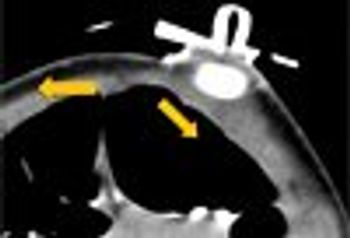
A 22-month-old boy with failure to thrive presented with a 3-day history of rhinorrhea, fever, and abdominal pain associated with tube feeding. A PEG tube had been placed 2 months before this visit.
A 3-year-old child was brought to her primary caregiver by her maternal grandmother who was concerned about the infected lesion shown here. The child was at the center of a heated custody dispute and abuse was strongly suspected. But could the lesion’s origin be something else?
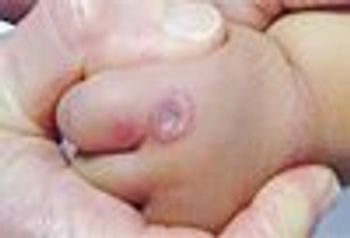
Disordered eating in boys : Beyond the 3 classifications in the DSM-IV Our Picks : Best new tech products Dermcase : Circular, scabby lesions in infant Puzzler : Agitation, seizures spell trouble for preteen boy Updates : Pneumococcal Vaccine, Oral Antiepileptics, Cholesterol Screening, Origins of Autism, Recurrent PID
Premature infants with the AB blood type who develop necrotizing enterocolitis are nearly 3 times more likely to die from it as preemies with other blood types, according to a recent study. A straightforward change in blood transfusion practice can reduce mortality, however. What do the researchers recommend?