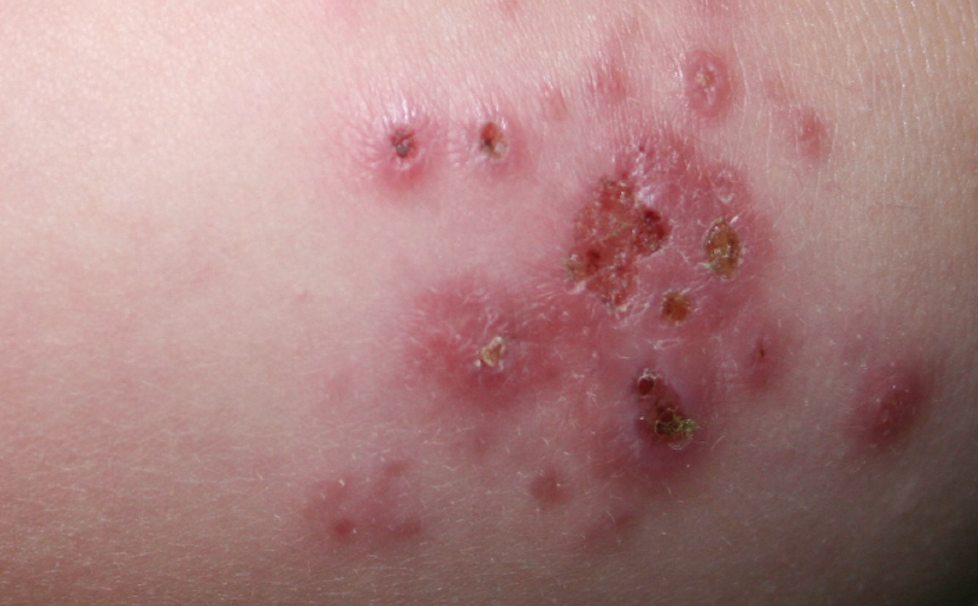


A landmark observational study is the first to report on the effect of ultraviolet-free blue light therapy on allergic skin disease in newborns.
A landmark observational study is the first to report on the effect of ultraviolet-free blue light therapy on allergic skin disease in newborns.

New research examined the potential role of Gram-negative skin bacteria in the pathogenesis and exacerbation of eczema, and their effectiveness to treat it.
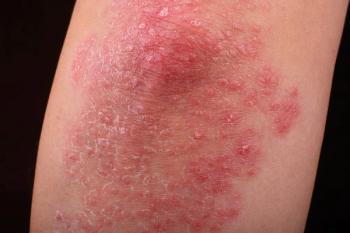
Children with psoriasis may have higher rates of associated medical comorbidities. Newest recommendations say such kids should be screened for these risk factors.
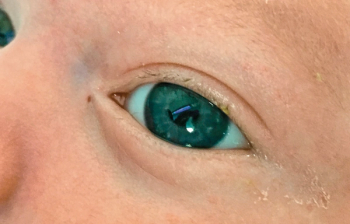
The mother of a healthy 4-week-old boy brings him to the office for evaluation of a small pit on the medial canthus of the left eye, noted since birth. There is constant drainage of tears onto the left side of his face and exudate on the bottom of the left medial canthus.
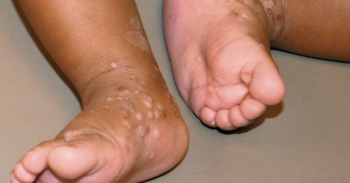
An anxious mother brings her healthy 4-month-old daughter for evaluation of itchy pustules on both hands and feet. The eruption has persisted despite 2 courses of permethrin for scabies. The infant also was diagnosed with hand-foot-and-mouth syndrome and dyshidrotic eczema, but neither of these diseases fit clinically.
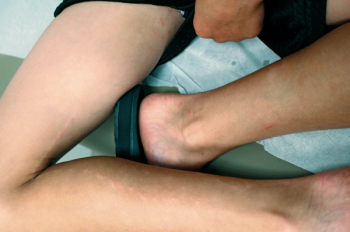
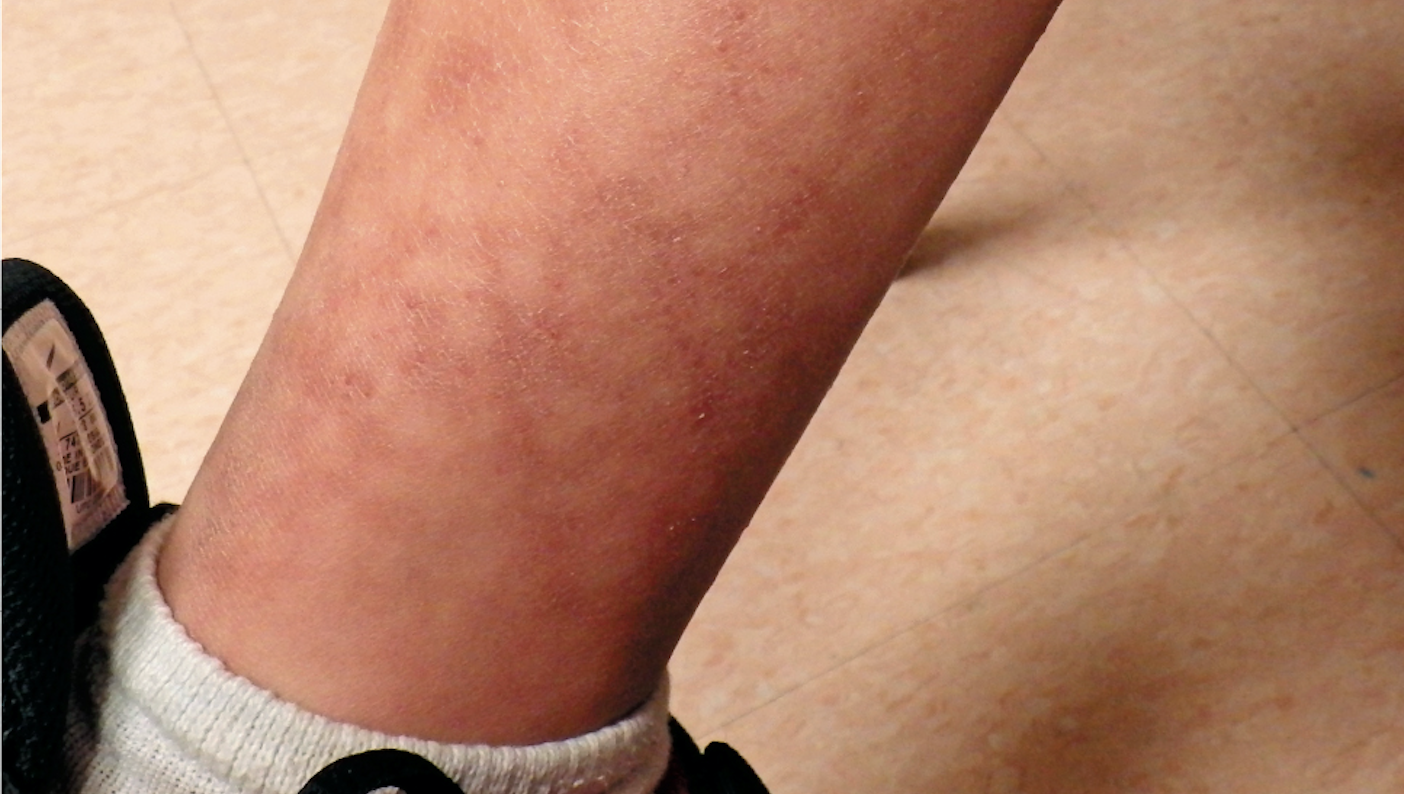
The worried mother of an 11-year-old boy arrives at the office for evaluation of an asymptomatic bumpy rash that appeared suddenly in his right groin a month ago, and that has now extended all the way down to his right ankle. What's the diagnosis?

Adding emollients to bath water for eczema relief doesn’t help improve the condition, but costs a lot more than topical treatments.

Many parents and professionals have these misconceptions about allergies and other unusual findings.
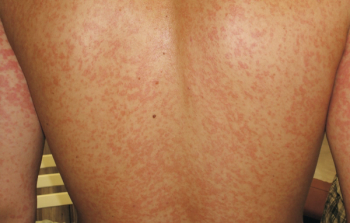
A 16-year-old boy develops a diffuse, rapidly progressive eruption on his trunk, face, and extremities 4 days after starting oral amoxicillin for presumed strep throat. He presents to the emergency department (ED) where Stevens-Johnson syndrome is considered. The ED physician notes no mucous membrane involvement.
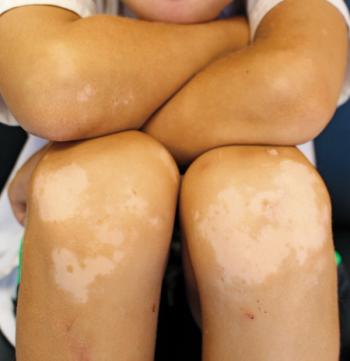
A 9-year-old boy presents for evaluation of white spots on his hands, elbows, knees, and legs. There is also a ring around a mole on his back. The patient’s parents first noted areas of depigmentation on his trunk and extremities, and his lesions have spread particularly in areas of trauma. The lesions were most noticeable in the summer when tanning increased the contrast between the involved and uninvolved areas of his body.

An 11-month-old boy was brought to the doctor by anxious parents for the evaluation of persistent diaper dermatitis. Despite trying multiple barrier creams and over-the-counter antifungal products, the rash did not resolve.
Following an uncomplicated pregnancy, labor, and delivery, a healthy 13-day-old girl presents for evaluation with a 2-day history of firm, violaceous nodules on her mid-upper back and right arm just above the axilla.
A healthy full-term newborn presented with a prominent sacral dimple within an oval patch. Ultrasound showed no evidence of spinal anomalies, and the child was discharged home. Three days later, the patch became elevated, red, and moist appearing, and she was brought to the emergency department (ED) for further evaluation of the “growing blister.”
We know you love a diagnostic challenge. Can you crack these 6 puzzling cases?
The parents of a healthy 5-month-old boy bring him to the office for evaluation of an enlarging yellowish nodule on the back of his right thigh. It started as a pink macule several months ago and became yellow and lumpy over the last month. The infant was born at term and has grown and developed normally. His parents deny any trauma, but report occasional bleeding from the surface of the nodule. They deny any new medications or outdoor exposures. There is no history of new topical skin products.
Eczema affects around 11% of children overall, but only about half of minority children with severe eczema are treated for the condition. A new study looks at why these children are overlooked.
For Contemporary Pediatrics, Dr Bobby Lazzara discusses a large retrospective cohort study published in the Journal of the American Academy of Dermatology that examined whether children with pediatric psoriasis are at increased risk of cancer and discusses 2 caveats to the findings.
A 16-year-old girl presents for evaluation of an asymptomatic brown rash over her central chest and back that developed over the preceding 6 months. She is embarrassed by the appearance.
The mother of a healthy 11-year-old boy brings him to the office for help to clear a rash that has persisted around his mouth for 3 months. Although the boy rarely licks his lips, he does not use lip products and has not changed his dental products.
The mother of a healthy 5-year-old girl brings her to the office for evaluation of 2 itchy plaques on her right ankle that have worsened over the last 10 days despite treatment for possible tinea corporis with topical clotrimazole 1% ointment and hydrocortisone 2.5% ointment. A fungal culture is pending.
A healthy 9-year-old female presents with a 1-day history of fever, progressive rash, conjunctivitis, and superficial oral ulcers.
A father brings his 8-year-old son to the office for evaluation of new, asymptomatic blue bumps that have appeared on the boy’s chest over the last several months (Figure). The dad notes that he has had similar lesions as well.
You are asked to evaluate a healthy 9-year-old girl with an itchy rash on her face, neck, and hands for a week. She had a similar eruption 1 month ago that resolved over several days. Although she has a history of poison ivy, her parents knew of no exposure. There was no history of new topical skin products. However, she had begun to eat more seasonal fruits recently, including strawberries, grapes, and mangos.
A healthy newborn girl returns for a follow-up visit at age 7 days, and she is exhibiting multiple disseminated red macules and papules of varying sizes. While in the nursery, several red blanching macules had been noted on her trunk at age 2 days.
A preoperative evaluation is requested for a 15-year-old boy who is a renal transplant patient maintained on oral mycophenolate mofetil and tacrolimus. His parents are worried that an itchy rash on his hands and feet, which has been progressing over the last 4 months, will result in postponement of his surgery.