


Dermatology
Latest News
Advertisement
Latest Videos



Shorts

1:48
Roflumilast cream safety in pediatric populations with atopic dermatitis
7 months ago
by
Lawrence Eichenfield, MD

1:37
Leveraging roflumilast cream in pediatric atopic dermatitis
7 months ago
by
Lawrence Eichenfield, MD

0:49
Importance of Long-Term Safety Data in Pediatric Populations with Atopic Dermatitis
7 months ago
by
Lawrence Eichenfield, MD

0:24
Understanding Vtama’s discontinuation rates and adverse effects
a year ago
by
Druhan Howell, MD
0:24
Why sleep improvement is vital for atopic dermatitis families
a year ago
by
Druhan Howell, MD

0:28
Safety and tolerability of tapinarof cream 1%
a year ago
by
Druhan Howell, MD(+1 more)
Podcasts


Advertisement
More News

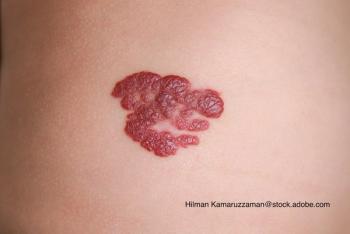
A 16-month-old with recurrent otitis media developed a spreading unilateral rash on her hip and thigh during antibiotic treatment. PCR testing confirmed herpes zoster, an uncommon diagnosis in young, vaccinated children.

Upadacitinib showed continued facial and body repigmentation in NSV through week 76, with numerically higher responses when combined with NB-UVB.

Can you guess the diagnosis?
The approval is based on BRAVE-AA-PEDS, in which 42% of adolescents receiving baricitinib 4 mg achieved at least 80% scalp hair coverage at week 36 vs 5% with placebo.

The FDA accepted the dersimelagon NDA with priority review for EPP and XLP; a decision on the oral MC1R agonist is expected by February 2027.
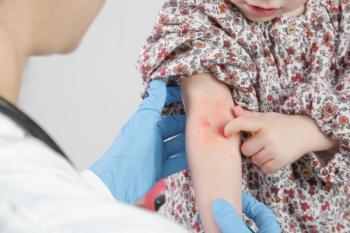
Children with atopic dermatitis have higher ADHD risk, particularly with early, severe disease and sleep disturbance, a review found.
Baseline severity and clinical phenotype may help predict response to systemic therapy in children with alopecia areata.
Can you guess the diagnosis?

Can you guess the diagnosis?

Phase 3 data show lebrikizumab improved skin clearance, itch, and quality of life in children with moderate-to-severe atopic dermatitis.

A Rutgers-led study finds teens who follow beauty influencers or watch tutorials use significantly more personal care products, many containing endocrine-disrupting chemicals.

New approvals and emerging data are expanding nonsteroidal topical treatment options for several chronic pediatric skin conditions.

Adverse childhood experiences may affect pediatric skin disease risk and outcomes, but researchers say evidence remains limited.
A systematic review found chronic pediatric skin disorders are consistently associated with psychological distress, reduced quality of life, and caregiver burden.
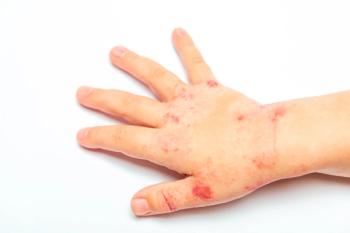
A pooled ADORING trial analysis found tapinarof cream improved skin clearance by week 2 across ages 2 through adulthood in atopic dermatitis.

An adolescent medicine specialist says pediatricians should proactively discuss social media skincare trends to help prevent skin irritation and misinformation.
An adolescent medicine expert says social media skincare routines may increase skin irritation and atopic dermatitis in teens.
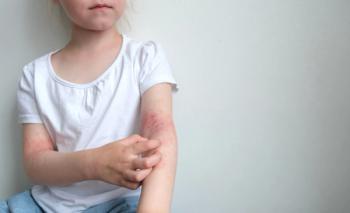
Tralokinumab showed expected pharmacokinetics and no new safety findings in 28 children with moderate-to-severe atopic dermatitis.
FDA expands approval of roflumilast cream 0.3% for plaque psoriasis to children aged 2 years and older, offering the first topical PDE4 inhibitor.
FDA approved risankizumab for children 6 and older with plaque psoriasis or psoriatic arthritis, adding a weight-based 55-mg syringe for those under 40 kg.
BM-3103 received FDA Fast Track designation for epidermolysis bullosa simplex as a phase 2 trial evaluates safety and efficacy.
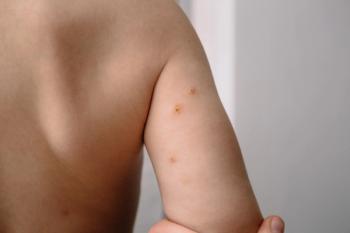
New FDA-approved options for molluscum contagiosum—in-office cantharidin and at-home berdazimer gel—reduce stigma and avoid painful removal.
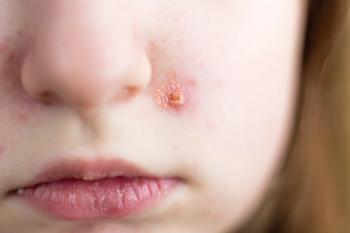
Learn how early detection and treatments for childhood eczema and hives can curb the atopic march and boost sleep, school, and quality of life.
The FDA has approved an every-8-week maintenance regimen for lebrikizumab-lbkz (EBGLYSS), giving eligible adults and adolescents with moderate-to-severe atopic dermatitis as few as 6 injections per year without mandatory topical therapy.
The FDA has approved bemotrizinol as the first new active sunscreen ingredient under the OTC monograph in nearly two decades, clearing the broad-spectrum UV filter for use in adults and children 6 months of age and older.
Advertisement
Advertisement
Trending on Contemporary Pediatrics
1
Hand, foot, and mouth disease: Red flags pediatricians should know
2
FDA approval of Gazyva offers new option for pediatric INS
3
DTaP 96% effective against pertussis in Alaska outbreak
4
Early choline in FASD tied to IQ, memory gains 5 years later
5