




The sNDA submission follows additional positive topline data that was presented in Janurary 2024, highlighting an open-label, long-term extension study evaluating tapinarof cream, 1%.
The sNDA submission follows additional positive topline data that was presented in Janurary 2024, highlighting an open-label, long-term extension study evaluating tapinarof cream, 1%.
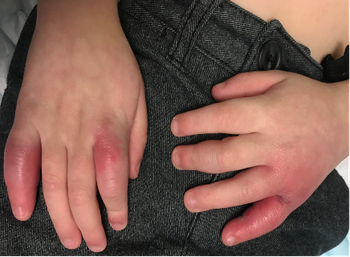
The child was otherwise healthy with no prior severe medical issues, and he did not present with COVID-19 symptoms. Can you diagnose this child based on the case below?

Read the case and take your best guess at diagnosing this 4-year-old patient.

In this Contemporary Pediatrics Q+A interview, Weily Soong, MD, breaks down FDA-approved tralokinumab-ldrm for patients aged 12 to 17 years with moderate-to-severe atopic dermatitis.

Review some of the top stories from the Contemporary Pediatrics website over the last week, and catch up on anything you may have missed.
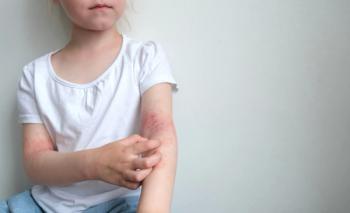
According to new pooled individual patient responses, roflumilast cream 0.15% treatment led nearly 92% of individuals to achieve a measurable improvement in the Eczema Area and Severity Index.
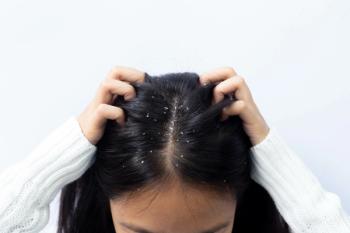
Seborrheic dermatitis patients with an inadequate response or intolerance to steroids were 3.5 times more likely to achieve Investigator Global Assessment (IGA) success with roflumilast foam 0.3% compared to vehicle, new data from the 2024 Winter Clinical Dermatology Conference revealed.
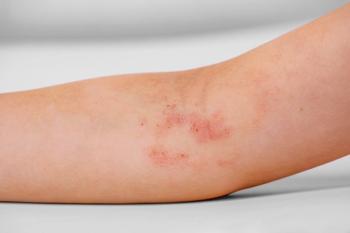
New interim data from the on-going, long-term extension ADORING 3 study and from an integrated analysis of the entire ADORING development program revealed efficacy and safety using tapinarof cream 1% continued beyond 8 weeks of treatment.

Berdazimer gel, 10.3% demonstrated positive, topline data in the phase 3 randomized clinical B-SIMPLE4 trial (NCT04535531) that featured a total of 891 patients aged 6 months or older who had 3 to 709 raised molluscum contagiosum lesions.
Birch triterpenes (FILSUVEZ; Chiesi Global Rare Diseases) is the first approved treatment for wounds associated with junctional epidermolysis bullosa (JEB), according to the developer.
Seborrheic dermatitis patients aged 9 years and older can now use roflumilast foam 0.3% following its approval by the FDA.
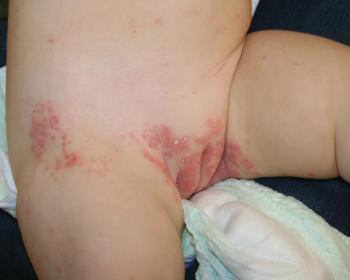
You are asked to evaluate a healthy 2-year-old girl who has developed a mildly pruritic rash with erythematous plaques, some with silvery-white scale, in the vulvovaginal area 3 months ago. What's the diagnosis?

Lawrence Eichenfield, MD, discusses topical steroid, non-steroidal, and potentially new atopic dermatitis treatments for the pediatric population.

In this Contemporary Pediatrics interview, Lawrence Eichenfield, MD, explains additional challenges pediatric atopic dermatitis patients face during winter months and colder weather.
Lawrence Eichenfield, MD, reacts to the FDA's acceptance of a supplemental New Drug Application for roflumilast cream 0.15% to treat atopic dermatitis (AD) in patients aged 6 years and older.
The FDA has accepted a supplemental New Drug Application (sNDA) for roflumilast cream 0.15% for the treatment of atopic dermatitis (AD) in children aged 6 years and up.
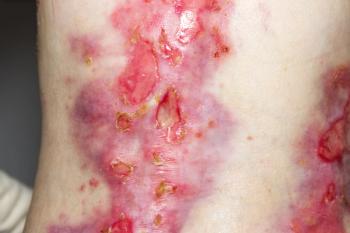
The FDA granted Priority Review to pz-cel following a phase 1/2 and a pivotal phase 3 study in which the treatment for recessive dystrophic epidermolysis bullosa (RDEB) demonstrated wound healing and pain reduction.
Of patients in the atopic dermatitis (AD) cohort, 36.6% developed at least 1 comorbidity amid follow-up compared to 28.5% in the non-AD reference cohort, investigators of a Sweden, nationwide, population-based cohort study found.
The topical gel is the first and only FDA-approved triple-combination, fixed-dose topical treatment for acne, and is set to be available in the first quarter of 2024, according to Bausch Health Companies Inc.
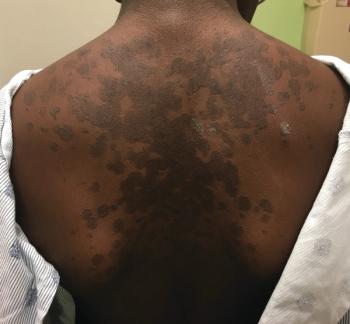
A healthy 13-year-old girl presented with a 1-month history of an asymptomatic, well-demarcated rash on her back and upper chest. The eruption consisted of discrete, dark brown papules that coalesced into large, flat-topped plaques with mild superficial scale and accentuation of skin markings. What's the diagnosis?
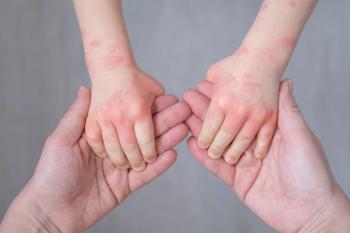
A rapid reduction in pruritis as early as 24 hours after first application was announced as new positive data from a pair of identical, phase 3 studies of tapinarof cream 1% in children as young as 2 years and adults with atopic dermatitis (AD).
Once-daily, topical roflumilast cream 0.3% has been approved by the FDA for children aged 6 to 11 years for the treatment of plaque psoriasis based on a data from a 4-week Maximal Usage Systemic Exposure study, and safety and efficacy data from a pair of phase 3 trials in adults.
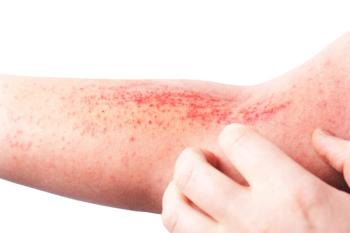
Positive topline results from a pair of identical phase 3 trials support the submission of a supplemental New Drug Application to the FDA for Arcutis Biotherapeutics’ roflumilast cream 0.15%, a once-daily topical to treat mild to moderate atopic dermatitis (AD) in children 6 years or older.
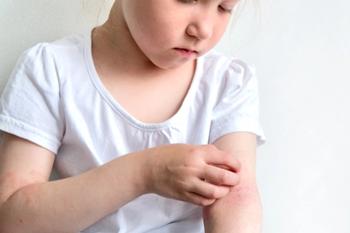
Based on recent positive phase 3 results, Arcutis Biotherapeutics,. intends to submit a supplemental New Drug Application with the FDA for roflumilast cream 0.05% to treat mild to moderate atopic dermatitis in children aged 2 to 5 years.
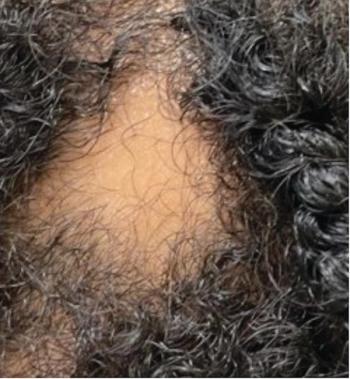
Hair loss is a condition that is often distressing and difficult to treat, particularly in adolescents. Here’s what you should know.