

Menstrual irregularity, acne, and other characteristics often seen in adolescent girls may be misdiagnosed as polycystic ovarian syndrome (PCOS).
Menstrual irregularity, acne, and other characteristics often seen in adolescent girls may be misdiagnosed as polycystic ovarian syndrome (PCOS).
When it comes to isotretinoin, dermatology experts say, pediatricians should advise parents not to believe everything they read online. Furthermore, patients can't always be relied upon to comply with the birth-control requirements for using the drug.
A worried mother brings her 2-year-old boy to your office for evaluation of an asymptomatic skin eruption that has been present for 2 months. The lesion developed 6 months after he sustained an abrasion to the same site when he fell on concrete steps.
A 17-year-old white female is transferred from an outside hospital with the chief complaint being painful oral ulcers. Over the last 72 hours, the pain from her ulcers has progressively worsened, leading to the inability to speak or eat. She also has a diffuse papulopustular rash. There is an extensive family history of autoimmune disease, and she tested positive for mononucleosis 2 months prior to hospitalization.
You are asked to evaluate a healthy 18-year-old girl with a history of “mosquito bites” on her arms and legs that appeared after her first pregnancy 2 years ago. Although not symptomatic, the lesions become redder and more swollen intermittently, particularly when accidentally scratched or rubbed.
You are called to the emergency room to see an ill-looking, 13-year-old boy with a severe flare of his atopic dermatitis associated with fever, malaise, and chills, which started a week ago.
The worried mother of a 4-week-old boy brings her son to you for evaluation of a rash that started 3 weeks ago on his left eyebrow and chest, then spread to his back, arms, and legs despite treatment with topical steroids. What’s your diagnosis?
The frightened mother of a vigorous, healthy 14-day-old girl brings her daughter to you for an urgent consultation regarding a facial rash that has blossomed since a few subtle spots were noted at birth. What’s your diagnosis?
A healthy adolescent boy asks you to cure an itchy and painful rash on the nape of his neck that began over a year ago when he switched barbers. What’s your diagnosis?
The mother of a healthy 8-month-old boy pops into your office for an urgent visit seeking advice on a golden brown bump on her son’s lower back, visible since 2 months of age. This morning when he awoke, it appeared angry, red, and swollen although the swelling seems to be improving. What’s your diagnosis?
You are asked to evaluate a 10-year-old girl for peculiar annular eruptions on her hands and feet following treatment for warts 6 weeks ago. What could be causing these eruptions?
You are called to the emergency room to evaluate a healthy 2-year-old boy with black spots on his legs that were noted yesterday evening. His younger brother developed similar black spots this morning. The boys are healthy, and the lesions are not symptomatic and appear to be superficial.
Acne flare-ups in adolescents respond best to treatment when patients and parents understand what acne is, follow their therapy guidelines, and have reasonable expectations about what therapy can achieve.
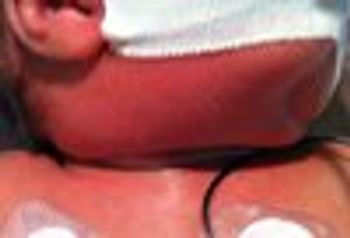
A 2-month-old infant had right submandibular swelling with inflammation and induration up to the nape of neck. Ultrasonography showed multiple enlarged lymph nodes with soft tissue swelling. Blood cultures grew Gram-positive cocci, which were identified as group B streptococci. Late-onset GBS infection is acquired from colonized household contacts.
You care called to the emergency department to evaluate a 4-month old girl with multiple areas of purpura, including a distinctive bruise on the later aspect of the left thigh. The child's mother states that she noticed these lesions after picking up the infant from her biologic father, whose was watching the child alone. No trauma history is reported. The child has been otherwise in good health, with no signs of infection.
The parents of a 15-day-old boy who returned for his 2-week checkup are worried about a firm, glistening papule on his abdomen that has been present since birth. The patient is otherwise healthy, but the parents are seeking reassurance. A pediatric dermatology referral was quickly placed.
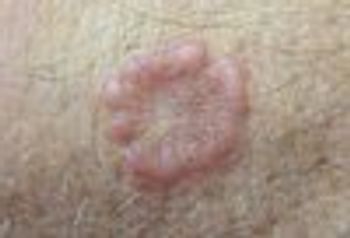
Test your skills in this 5-question quiz.QUESTION 1: A 16-year-old boy presented with an extremely pruritic rash on the elbows, at the wrists, and on the top of the hands. This is classic for granuloma annulare. Courtesy of Ted Rosen, MD
The worried parents of a health 10-year-old girl ask you to evaluate her for a total-body red rash associated with scaling and edema.
This annular configuration is classic for granuloma annulare; very widespread lesions may signal diabetes mellitus.
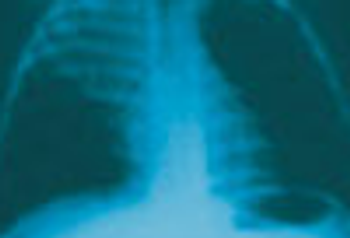
A 6-month-old girl was brought to the ED with fever, cough, and irritability; she appeared well-hydrated. She was born prematurely and had a long, complicated stay in NICU, where she received CPR on 2 occasions. There was concern about lung "congestion." The ED physician made a diagnosis of pneumonia. Rib fractures were also noted, but there was no history of fractures at the time of discharge from the NICU.
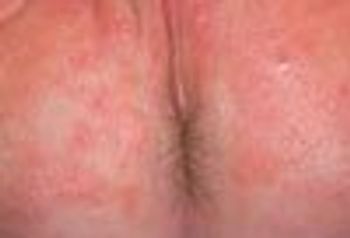
Acrodermatitis enteropathica and Langerhans cell histocytosis are recalcitrant forms of diaper dermatitis( DD); other variants are: candidal DD, irritant or contact DD, Jacquet’s disease, and psoriasis.

Take this week's quiz and test your diagnostic and therapeutic skills.

Take this week's quiz and test your diagnostic and therapeutic skills.
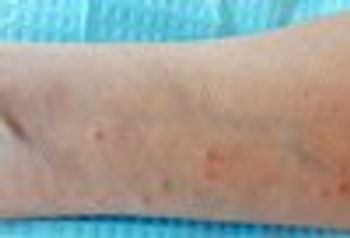
The morphology and distribution of these lesions is characteristic of ectoparasite bites, which occur when a human carries a pet-usually a kitten or puppy-as if the animal were a human newborn baby.