
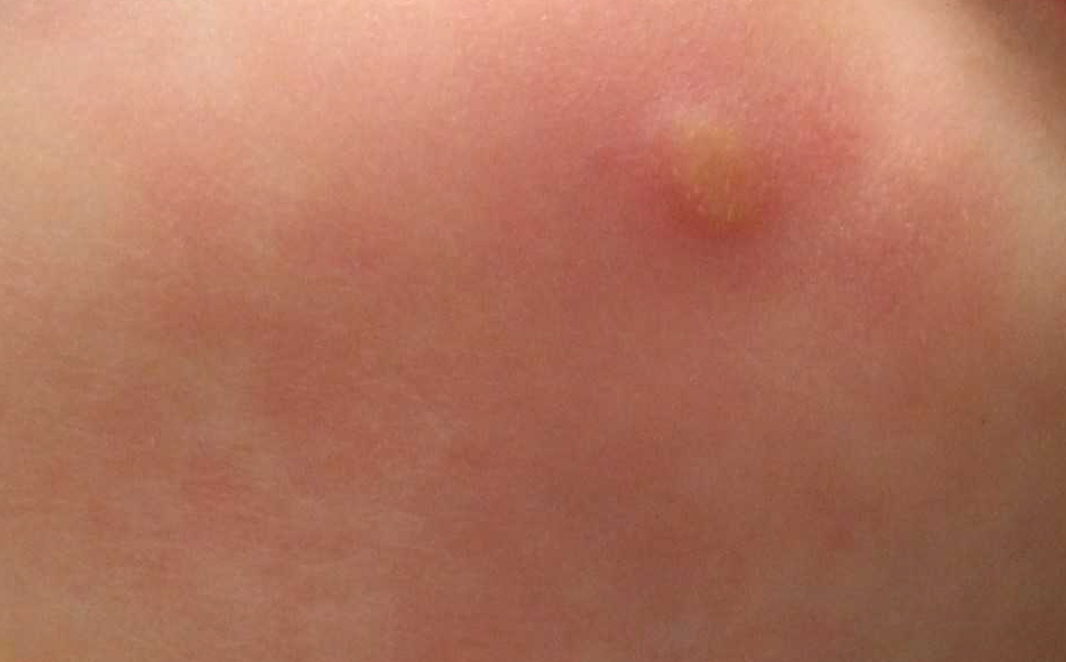





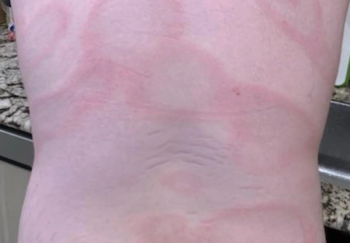
A 17-year-old male patient presents with multiple lesions developed on his trunk, face, and extremities that had previously been solitary, red expanding lesion on his right arm at the site of a tick bite that occurred during a hike.
A 17-year-old male patient presents with multiple lesions developed on his trunk, face, and extremities that had previously been solitary, red expanding lesion on his right arm at the site of a tick bite that occurred during a hike.
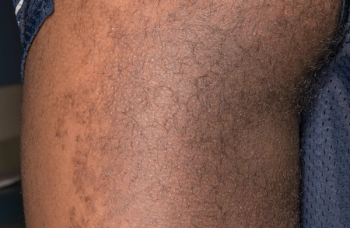
An adolescent boy developed an asymptomatic brown plaque on the back of his leg. He recently noted the growth of coarse hairs within the lesion.

Using oral propranolol to treat infantile hemangioma is a normal clinical course. When faced with a recurrence of the hemangioma, is a second course of propranolol warranted?
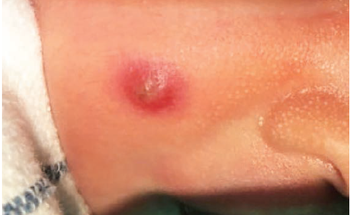
A newborn boy born via normal vaginal delivery at 38.6 weeks gestation to a 33-year-old G5P2022 mother presented at birth with an asymptomatic 8-mm red, papulonodule with central crusting on the right cheek. What's the diagnosis?
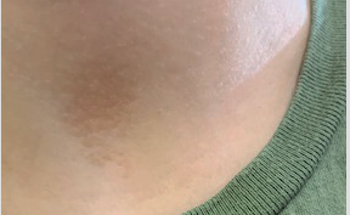
During the evaluation of a healthy 7-year-old boy, an asymptomatic brown “dirt-like” rash is found on the anterior neck. It has progressed over the last 2 months and does not clear with routine bathing and aggressive scrubbing by his mother with soap and water.

Spending time around animals as an infant has been suggested as a way to reduce the incidence of atopic dermatitis. An investigation offers some insight.

Check out these dermatologic cases as well as take a look at dermatologic signs of COVID-19

Diagnosing multisystem inflammatory syndrome in children (MIS-C) has not always been easy. A new report indicates that mucocutaneous findings might aid in diagnosis.
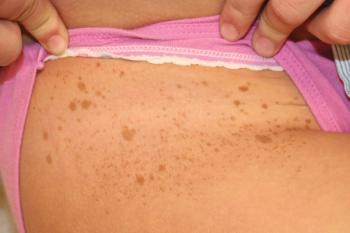
A healthy 16-year-old girl presented with asymptomatic lesions she had at birth. Examination revealed a 15 cm well-demarcated light brown hyperpigmented background patch localized to the right inguinal skin-fold and, within it, café-au-lait macules and patches, greater than 1.5 cm, with diffuse freckling.
Dermatologic findings in the age of COVID-19, plus lots more at the 2020 American Academy of Pediatrics National Conference & Exhibition.
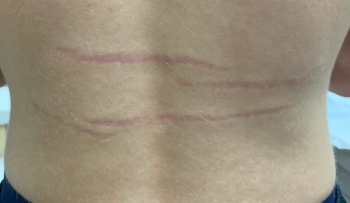
A 15-year-old male first noticed the marks on his back during a recent vertical growth spurt. On exam there are multiple horizontal violaceous linear striae on his back. He is otherwise healthy and denies any history of back injury or exposure to topical or systemic steroids. What's the diagnosis?
An extensive literature review looks at the dermatoses that are connected to video game play.

Growing evidence indicates that COVID-19 impacts more than the respiratory system. Clinicians should keep an eye out for dermatologic conditions that may be associated with the illness.
Three case studies look at the efficacy of using foreskin for syndactyly repair.
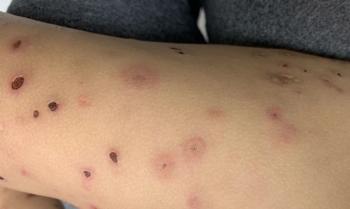
You are asked to evaluate a healthy 19-month-old boy with a history of recurrent blisters on his arms and legs for over a year that have now spread to his face. The blisters scab over quickly, ulcerate, and heal with post-inflammatory pigmentary changes. What's the diagnosis?

COVID-19 has been seen as primarily a disease impacting the lungs, but more of the body's systems have been shown to be impacted by the disease. Here's a look at how the disease impacts the skin.
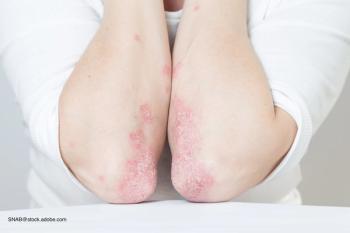
The US Food and Drug Administration (FDA) has approved STELARA for treating moderate-to-severe plaque psoriasis in children.
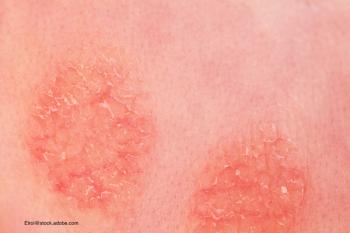
Atopic dermatitis treatment has dramatically changed over the years. Here’s a look at the current options.
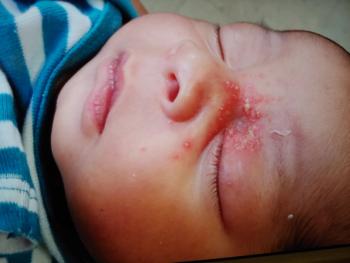
A healthy 11-day-old male infant is brought to the pediatric clinic for evaluation of rash. The rash started with a 2-mm papule on the left medial epicanthal fold 4 days before the clinic visit. A day before coming to the clinic, the rash had spread to the upper left eyelid and the nasal bridge. What's the diagnosis?
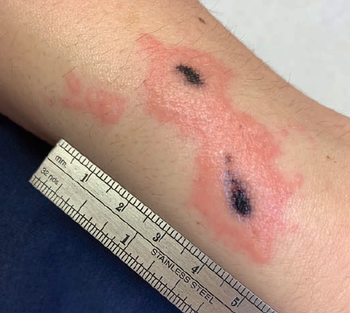
A 16-year-old girl presents for evaluation of a rash on her left forearm, which was 2 enlarging red areas that became increasingly pruritic and edematous. What's the diagnosis?

A recent Danish study examines the connection between body mass index (BMI) and the risk of developing hidradenitis suppurativa in adulthood.
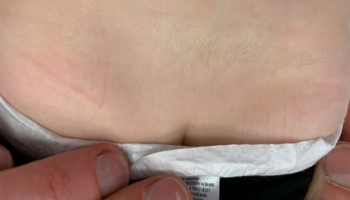
The parents of a healthy 20-month-old boy ask for advice about a birthmark on his lower back. The lesion is asymptomatic and has grown proportionately with their son. What's the diagnosis?

The US Food and Drug Administration has approved dupilumab (Dupixent, Sanofi and Regeneron) for the treatment of moderate-to-severe atopic dermatitis in children aged 6 to 11 years.
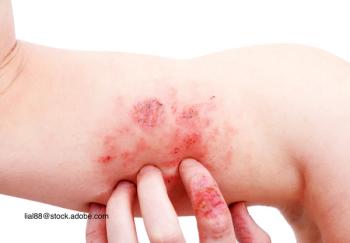
A new investigation looks at the safety of psoriasis treatment in pediatric cases.

Teenagers like to spend time in the sun and even engage in tanning, in spite of warnings about skin cancer and aging. A new study indicates that using technology could help change adolescent minds.