

Review some of the top stories from the Contemporary Pediatrics website over the last week, and catch up on anything you may have missed.
Review some of the top stories from the Contemporary Pediatrics website over the last week, and catch up on anything you may have missed.

Interim trial findings suggest osteopathic manipulative treatment is feasible and well-tolerated in infants with positional plagiocephaly.

New ecopipam analyses show tic reduction within 8 weeks and sustained to 18 months in Tourette syndrome as the FDA weighs approval.

A teddy bear program pairs children with stuffed animals that have matching medical devices to help normalize care and reduce device-related anxiety.

Oral icotrokinra sustained scalp, genital, and hand/foot psoriasis clearance through week 112 in ICONIC-TOTAL, with no new safety signals.

More than half of firearm-owning parents of children aged 1 to 5 years reported at least 1 firearm stored unlocked, loaded, or both.

The Autus Size-Adjustable Valve can be implanted at about 13 mm and balloon-expanded to 22 mm as children grow, with no deaths or strokes among 62 patients studied.

A 16-month-old with recurrent otitis media developed a spreading unilateral rash on her hip and thigh during antibiotic treatment. PCR testing confirmed herpes zoster, an uncommon diagnosis in young, vaccinated children.

AAP’s 2026 conference will bring pediatricians updates on AI, vaccines, misinformation, nutrition, mental health, and clinical care.

A recap of the top clinical trial and pipeline data readouts affecting pediatric care during September 2026.

Upadacitinib showed continued facial and body repigmentation in NSV through week 76, with numerically higher responses when combined with NB-UVB.

A recap of the top FDA approvals/regulatory decisions/pipeline updates affecting pediatric care during September 2026.

Joseph Rossano, MD, discusses how FDA approval of mavacamten introduces a disease-targeted treatment option for adults and pediatric patients weighing 30 kg (66 lbs) or more with symptomatic oHCM.

Mavacamten becomes the first cardiac myosin inhibitor approved for adults and pediatric patients weighing 30 kg (66 lbs) or more with symptomatic oHCM.

In a 48-patient phase 1b trial, ecnoglutide was well tolerated in adolescents with obesity and reduced BMI up to 12.6% at 20 weeks.

Can you guess the diagnosis?

DBV filed a BLA for the Viaskin peanut patch in peanut-allergic children aged 4-7, citing phase 3 VITESSE data, and requested priority review.
ScolimiR-3D, a 6-microRNA blood test to predict severe curve progression in AIS, received FDA Breakthrough Device designation.

Brian Vickery, MD, discusses a phase 1 trial evaluating the safety and tolerability of a microneedle stamp designed to deliver peanut protein through the skin.
The FDA approved tiratricol (Emcitate) for peripheral thyrotoxicosis in MCT8 deficiency, the first approved therapy for the rare disorder.
FDA accepts leniolisib sNDA with priority review for children with APDS aged 4+ weighing 13 to <27 kg; PDUFA date is January 30, 2027.
FDA approves oral ALK2 inhibitor zilurgisertib for FOP in patients 12+, based on phase 2 PROGRESS data on new heterotopic ossification volume.
The approval is based on BRAVE-AA-PEDS, in which 42% of adolescents receiving baricitinib 4 mg achieved at least 80% scalp hair coverage at week 36 vs 5% with placebo.
FDA approved obinutuzumab for relapsing or steroid-dependent childhood-onset INS, based on INShore data showing 95.5% vs 73.2% sustained remission.
Review some of the top stories from the Contemporary Pediatrics website over the last week, and catch up on anything you may have missed.
Glucommander Pediatrics received FDA Breakthrough Device Designation for IV insulin dosing in hospitalized children younger than 2 years, but remains uncleared.

Jonathan Miller, MD, discusses earlier HPV vaccination, individualized conversations with hesitant families, and strategies to improve vaccine uptake.
Jonathan Miller, MD, discusses factors behind lagging HPV vaccination rates and how pediatricians can address common parent concerns.

In a Hirschsprung disease mouse model, diet shifted gut microbes and inflammation, with a 3-fold survival difference between standard diets.
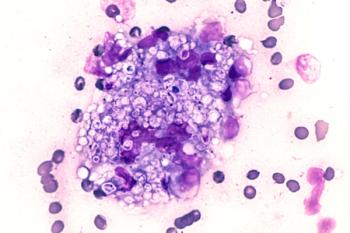
The latest IDSA histoplasmosis update adds a consensus statement on severe disease and outlines when children with pulmonary infection warrant itraconazole therapy.