


Much was made about how virtual learning was an imperfect substitute for in-person education that left many sociodemographic groups behind. When schools reopened for in-person education, were those groups left behind again?

Much was made about how virtual learning was an imperfect substitute for in-person education that left many sociodemographic groups behind. When schools reopened for in-person education, were those groups left behind again?

Often discussed in adult patients, the likelihood of long COVID-19 in children is less well known. A research letter offers insight.

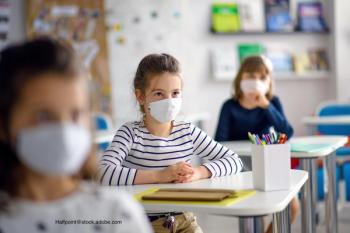
The newest guidance says that all students aged older than 2 years should wear masks for in-person learning.

Rotavirus can lead to gastrointestinal concerns that can be hazardous to children when rehydration isn’t readily available, which means that a safe, effective vaccine could be life-saving. A meta-analysis examines the safety and efficacy of available immunizations.

When treating multisystem inflammatory syndrome in children (MIS-C), does an initial treatment with intravenous immune globulin with glucocorticoids perform better than just intravenous immune globulin?

Parents and children are eager to get back to “normal” as the number of COVID-19 cases drops, so targeted education and individualized advice are important for families in an almost post–COVID-19 world. Pediatricians can provide guidance about what is and isn’t safe.


Educating families to alleviate fear in pediatric populations regarding the flu vaccine will improve the vaccination rate and protect high-risk children. Due to the negative effects of the flu in children with diabetes, it is vital that at-risk youth be vaccinated.

Contemporary Pediatrics speaks with Dr. Jeffrey Gerber about when we will see COVID-19 vaccines for children aged less than 12 years.

There are many reasons why a caregiver may refuse to have his or her child receive the human papillomavirus (HPV) vaccine, including safety concerns. A research letter examines whether those concerns have increased.

Contemporary Pediatrics spoke with Andrew J. Schuman, MD, FAAP, about how to help families with mixed COVID-19 vaccine status remain safe and healthy.

A link between race and severe COVID-19 has been noted in adults. A report investigates whether such a link exists in children.

In adults, certain health conditions were linked to a greater risk of hospitalization and severe COVID-19 infection. A report examines whether this is true in the pediatric population.

Many pregnant women are given the season influenza vaccination to provide protection for both mother and child. A study examines whether this vaccination is linked to adverse health outcomes in childhood.

As summer approaches, many children will spend time playing in pools, water parks, lakes, rivers, and oceans. Several serious types of infections, although relatively infrequent, have been associated with recreational water activities.

The last meeting of the COVID-19 vaccine congress from the International Society for Vaccines (ISV) provided information on the hypersensitivity events tied to mRNA vaccines as well as the most recent information on the Janssen and Novavax vaccines.

The company has publicized data from the TeenCOVE study of the vaccine along with plans to seek authorization in the coming weeks.

As the COVID-19 vaccine expands to include more of the pediatric population and restrictions continue to loosen, what's going to happen now?

A recently updated Practice Advisory from the American College of Obstetricians and Gynecologists (ACOG) provides an overview of the latest guidance for COVID-19 vaccination in pregnant and lactating patients.

A study examines if promoting positive behaviors including masking leads to improved face covering in children with autism spectrum disorder and/or attention-deficit/hyperactivity disorder.

Robust secretion of SARS-CoV-2 specific IgA and IgG antibodies were found in breast milk of breastfeeding women for 6 weeks after the first of 2 vaccinations against COVID-19.

Contemporary Pediatrics sat down with Dr. Donna Hallas to discuss how to communicate with parents as well as how to address vaccines missed because of the pandemic.

The American Academy of Pediatrics (AAP) issued a statement that urges parents get all children and teenagers aged 12 and older vaccinated with Pfizer/BioNTech vaccine, which recently had its authorization expanded.

The US Food and Drug Administration expanded the emergency use authorization of the 2-dose vaccine to include children aged 12 to 15 years.

A session of the American College of Obstetricians and Gynecologists 2021 annual meeting pointed to the dramatic increase in sexually transmitted infections (STIs) in the United States and presented highlights from the updated Centers for Disease Control and Prevention (CDC) STI guidelines.