

New Endocrine Society guidance recommends more individualized evaluation and treatment of central precocious puberty in children.
New Endocrine Society guidance recommends more individualized evaluation and treatment of central precocious puberty in children.

Researchers detected multiple endocrine-disrupting chemicals in breast milk and infant urine, highlighting early-life exposure during infancy.

In a parallel regulatory action, the European Medicines Agency has also validated a marketing application for Tivicay covering the neonatal indication.

New FDA-approved options for molluscum contagiosum—in-office cantharidin and at-home berdazimer gel—reduce stigma and avoid painful removal.

Jon Farber, MD, shares his thoughts on a contactless monitoring tool for sleep in Down's syndrome.

Get caught up with Contemporary Pediatrics. This list helps you navigate our top stories from the week, all in one place.
Cadrenal has announced that it plans to seek FDA Rare Pediatric Disease Designation for tecarfarin in children with Kawasaki disease and coronary aneurysms.

A new kids’ series brings fun, physician-led health lessons and representation to underserved families—boosting trust, curiosity, and literacy beyond clinics.

Baloxavir marboxil is a first-in-class cap-dependent endonuclease inhibitor that functions as a prodrug.

Newborn screening speeds SMA treatment, and a first prenatal risdiplam case hints at preventing motor neuron loss before birth.
The approval is based on data from the phase 3 STRIDE-13 trial.
Jon Farber, MD, shares his thoughts on managing renal stones.

New Brain Communications data show doxecitine and doxribtimine reduce mortality risk by up to 94% in early-onset thymidine kinase 2 deficiency.
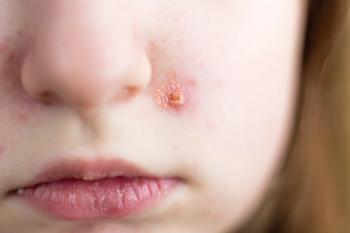
Learn how early detection and treatments for childhood eczema and hives can curb the atopic march and boost sleep, school, and quality of life.
Jon Farber, MD, shares his thoughts on ultrasound for the diagnosis of ankle fractures.
BioMarin reports 3-year vosoritide growth data in hypochondroplasia and early BMN 333 findings in achondroplasia.

pCPA gains FDA Orphan Drug Designation for monoamine oxidase deficiency, signaling early development for an ultrarare neurodevelopmental disorder.

Diazoxide choline showed sustained hyperphagia improvements in Prader-Willi syndrome after randomized withdrawal and retreatment.

Setmelanotide reduced BMI measures, fat mass, and hyperphagia scores in interim phase 2 Prader-Willi syndrome data.

A feasibility study found acoustic resonance therapy improved nasal congestion and rhinitis symptoms in adolescents without adverse events.
The FDA cited Happiest Baby, Inc. for distributing unevaluated X-Small and X-Large sleep sacks, marketing its bassinet for hospital use without authorization, and multiple quality system violations including reports of mold and unsanitary refurbished units.

The FDA has approved gadoquatrane (Ambelvist), a next-generation macrocyclic GBCA that delivers effective CNS and whole-body MRI contrast at 60% less gadolinium than standard macrocyclic agents.
Physicians treating infants who consumed Nara Organics Whole Milk Organic Powdered Infant Formula should initiate treatment based on clinical presentation and not await laboratory confirmation.
The FDA granted accelerated approval to teplizumab (Tzield) for children aged 8–17 with recently diagnosed stage 3 T1D, based on PROTECT phase 3 data.
The integrated CGM, first cleared over-the-counter for adults in 2024, is now available without a prescription for people 2 years of age and older who do not use insulin.
Get caught up with Contemporary Pediatrics. This list helps you navigate our top stories from the week, all in one place.

A new Surgeon General advisory links excessive screen use to developmental, mental, physical, and academic risks in children and adolescents.

A CHOP-led study identified IL-6 and IFN-γ immune activation tied to worse recovery in children with sepsis or organ failure.

A first-in-human study of 96 preterm infants shows broadband optical spectroscopy can safely distinguish NEC from healthy tissue within 2 minutes at bedside, without pain or radiation.

Mental health diagnoses are appearing in more pediatric primary care visits, with anxiety showing the largest increase over the past decade.