

Dermatology

Latest News


Episodic right-sided facial flushing was noted in a 2-month-old girl born at full term via forceps-assisted vaginal delivery. The erythema appeared within minutes of latching onto her mother’s breast and resolved within 5 to 10 minutes after breastfeeding. The episodes of flushing had begun a week before the clinic visit; there were no collateral symptoms of anaphylaxis. Because food allergy was suspected, the mother had eliminated all dairy products from her diet.

Circumscribed erythematous lesions developed on the back and abdomen of this 19-month-old boy. The rash was mildly pruritic. The parents gave the child 1 dose of diphenhydramine, and the rash resolved after an hour. About 12 hours later, new lesions developed on the face, neck, and upper back. The child was given the same treatment and the symptoms resolved. The following morning, widespread lesions were noted on the child's face, neck, trunk, and extremities.

A 7-month-old child appears at the derm office with a blistering eruption that started six days before on her face and neck, and has spread to trunk and extremities.

The parents of this 6-year-old girl expressed concern about a yellow-brown arciform plaque on their daughter's cheek that has been present since birth. Although it has remained stable throughout her early childhood, her parents wonder whether it may become cancerous later on. Would you recommend removing the lesion?

In his Dermclinic case in the March 2009 issue of CONSULTANT FOR PEDIATRICIANS (page 77), Dr Kirk Barber discusses juvenile plantar dermatosis (JPD). A very simple treatment for this condition is the use of a home foot spa, in which wax is melted and the foot immersed according to the directions included with the device. Following the wax immersion procedure, the patient should apply a good lotion. JPD can be remedied or at least controlled with this treatment.

A 5-month-old Asian boy was brought for evaluation of hair loss and a red, scaly rash on the scalp and body. The rash had not responded to hydrocortisone 2.5% ointment. There was a family history of asthma, food allergies, and allergic rhinitis. His mother had Hashimoto thyroiditis.

Asthma exacerbations continue to cause a significant number of emergency care visits and hospitalizations among children.1 In “Managing Asthma in Children, Part 1” (CONSULTANT FOR PEDIATRICIANS, May 2009, page 168), we reviewed the epidemiology, risk factors, and diagnosis of asthma in children. We also discussed how to make an initial assessment of asthma severity. In Part 2, we review the key components of treatment.

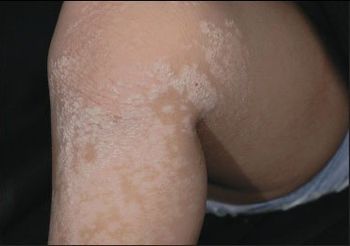
Vitiligo

This white patch in the medial periorbital area of a 15-year-old girl had been present for several months. It was asymptomatic. The patient denied having had an injury to the area. Results of a potassium hydroxide preparation of a skin smear and fungus culture were negative. She had no history of other hypopigmented lesions and was otherwise healthy. There was no family history of vitiligo or autoimmune disease.

An itchy rash developed around the nose in this 8-year-old boy. At first it responded to the application of a midstrength corticosteroid cream. However, the rash returned promptly after the cream was stopped and then spread to the perioral area. It is no longer responding to treatment with the topical corticosteroid that initially was effective.

A 5-month-old girl with progressively worsening generalized rash of 3 weeks’ duration. No obvious sensitivity, fever, recent infection, medication use, or known contact with irritant.

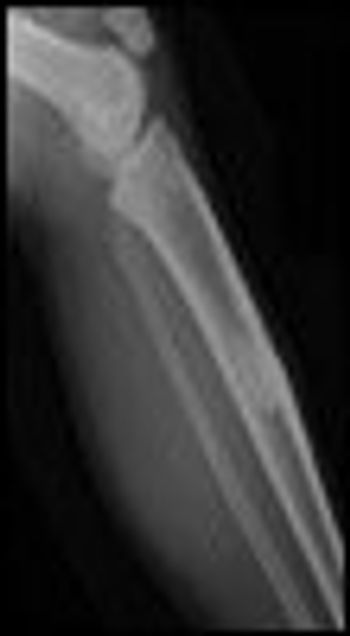
A 14-year-old girl with systemic lupus erythematosus (SLE) was evaluated for worsening left leg pain of 1 week’s duration. A month earlier, she had presented with left knee arthritis and a vasculitic rash; the antinuclear antibody titer was positive. In addition, she had leukopenia, myositis, hypocomplementemia, and mild proteinuria.

Asthma is one of the most prevalent chronic diseases in the United States, and most medical practitioners encounter patients with asthma on a daily basis. The goal of this 2-part article is to discuss the diagnosis and management of asthma in children younger than 12 years. In part 1, we will briefly outline the epidemiology, pathophysiology, and risk factors; then we will review, in more detail, the diagnosis of asthma and the initial evaluation of asthma severity.

For 2 days, a 17-year-old boy had a widespread pruritic eruption that involved the trunk and extremities but spared most of the face. Many of the lesions were annular, and they would appear and resolve within 1 day. The patient denied shortness of breath, difficulty in swallowing, and periorbital swelling.

The father of a 10-year-old boy was concerned about the asymptomatic rash on his son’s anterior thighs that had persisted for 9 months. The macular, reticular, erythematous rash hadevident hyperpigmentation bilaterally. The child had been otherwise healthy.

A 7-year-old boy with annular, asymptomatic, flesh-colored lesion onthe wrist that had developed slowly over the past month. The parents hadremoved the child from school because they were told that the lesion wasringworm. The lesion had failed to resolve after application of an antifungalcream for 10 days.

A persistent, eczematous dermatitis had developed in the perioral area during the winter months in this 10-year-old boy. Topical corticosteroid creams had been tried, and these seemed to help some, but the ondition never really cleared. Because of the failure of the corticosteroid creams, a topical antifungal cream had also been tried; however, this, too, was of limited effectiveness.